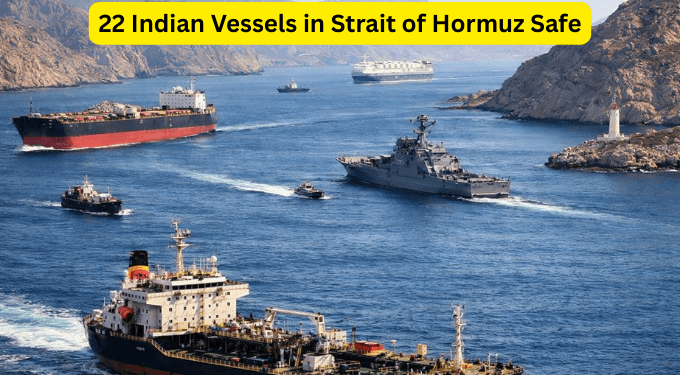
1. Introduction: A Sigh of Relief for Indian Maritime Interests
The Ministry of External Affairs has officially confirmed that all Indian vessels in Strait of Hormuz safe despite the rising regional tensions. This announcement has brought significant peace of mind to the shipping industry.
The Strait of Hormuz, a narrow waterway separating the Persian Gulf and the Gulf of Oman, is the world’s most important oil transit point. Any disruption here sends shockwaves through the global economy, specifically impacting countries like India that rely heavily on energy imports. Ensuring that Indian vessels in Strait of Hormuz safe is critical for national energy security.
Read our Popular Topic: 7 Shocking Facts: Iraq Oil Port Shutdown Israel Beirut
2. The Current Crisis: Why Were 22 Vessels at Risk?
The confirmation that these Indian vessels in Strait of Hormuz safe came after intense monitoring by naval and diplomatic channels. The concern began following reports of increased naval activity and potential threats to merchant shipping in the region.
With global powers repositioning their fleets and regional actors intensifying surveillance, merchant vessels often find themselves in a precarious position. According to the Ministry of External Affairs (MEA), 22 vessels with Indian flags were identified in the high-risk zone. Proactive steps were taken to ensure all Indian vessels in Strait of Hormuz safe from any potential seizures.
3. The Strategic Importance of the Strait of Hormuz
To understand why keeping Indian vessels in Strait of Hormuz safe is headline news, one must understand the geography.
-
The Chokepoint: At its narrowest, the Strait is only 21 miles wide.
-
The Volume: Approximately 21 million barrels of oil pass through daily.
-
India’s Stake: India imports nearly 80% of its crude oil, much of which passes through this lane. This is why the government prioritizes keeping every Indian vessel in Strait of Hormuz safe.
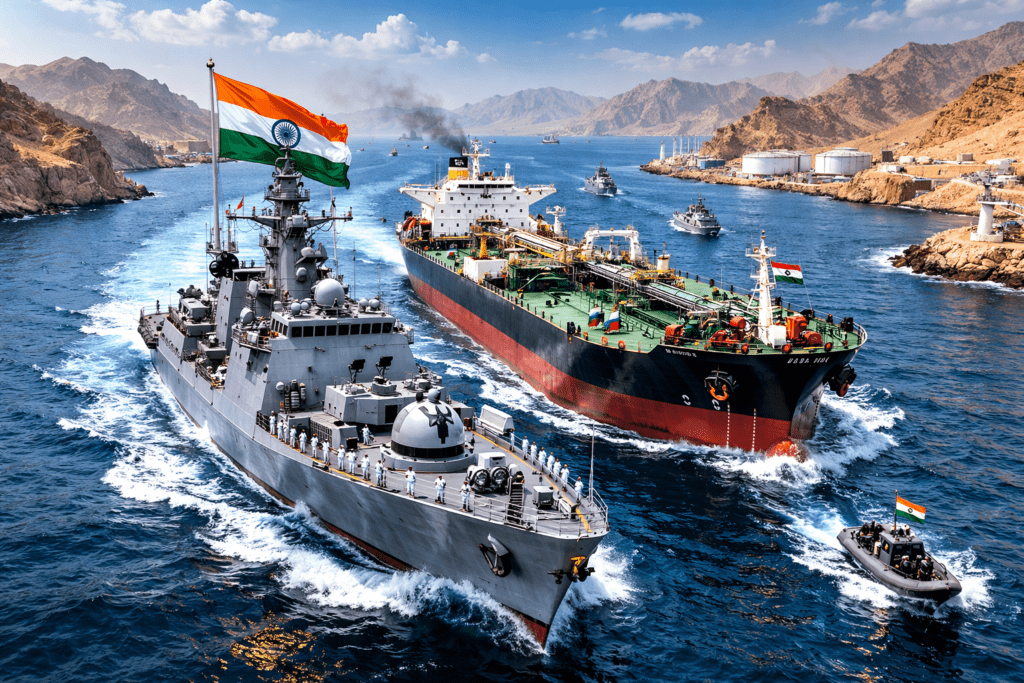
4. Operation Sankalp: India’s Silent Guardian
Since 2019, the Indian Navy has been conducting Operation Sankalp. This operation is the primary reason why Indian vessels in Strait of Hormuz safe even during heightened conflicts.
In response to attacks on merchant tankers, the Indian Navy deployed frontline warships to provide security. By maintaining a constant presence, the Navy ensures that Indian vessels in Strait of Hormuz safe from external threats.
5. Geopolitical Tensions: The Root Cause
The security-induced delays are a result of tensions between global powers. India maintains a delicate “Strategic Autonomy” in this region. This diplomatic balance is a key factor in keeping Indian vessels in Strait of Hormuz safe. While other nations face ship seizures, India’s neutral stance helps in ensuring Indian vessels in Strait of Hormuz safe during transit.
Expand Your Knowledge: Official Ministry of External Affairs Updates on Maritime Security
6. The Economic Impact of Maritime Disruptions
If the government had not ensured Indian vessels in Strait of Hormuz safe, the impact on the Indian economy would have been multi-fold:
-
Energy Inflation: Crude oil prices would spike.
-
Insurance Costs: War-risk premiums would make imports expensive.
By keeping Indian vessels in Strait of Hormuz safe, India avoids these massive financial losses.
7. Statistical Deep-Dive: India’s Maritime Footprint
Current status shows all Indian vessels in Strait of Hormuz safe.
| Metric | Detail |
| Daily Oil Flow through Hormuz | 21 Million Barrels |
| India’s Dependence on Gulf Oil | ~60% of total imports |
| Status of Fleet | All Indian vessels in Strait of Hormuz safe |
| Active Navy Warships | 2 to 3 (Constant monitoring) |
8. International Maritime Law: UNCLOS and Safety
The safety of these vessels is protected by international law. Under UNCLOS, foreign ships enjoy the right of Innocent Passage. This legal framework helps in keeping Indian vessels in Strait of Hormuz safe. India’s adherence to these laws ensures that Indian vessels in Strait of Hormuz safe under the “Transit Passage” regime.
9. Challenges for Indian Seafarers
Ensuring all Indian vessels in Strait of Hormuz safe provides mental peace to the seafarers’ families. India has been advocating for “Seafarers as Key Workers” to ensure that while Indian vessels in Strait of Hormuz safe, the crew members are also treated with priority protection. Live Shipping Map – Track Indian Vessels in Real Time.
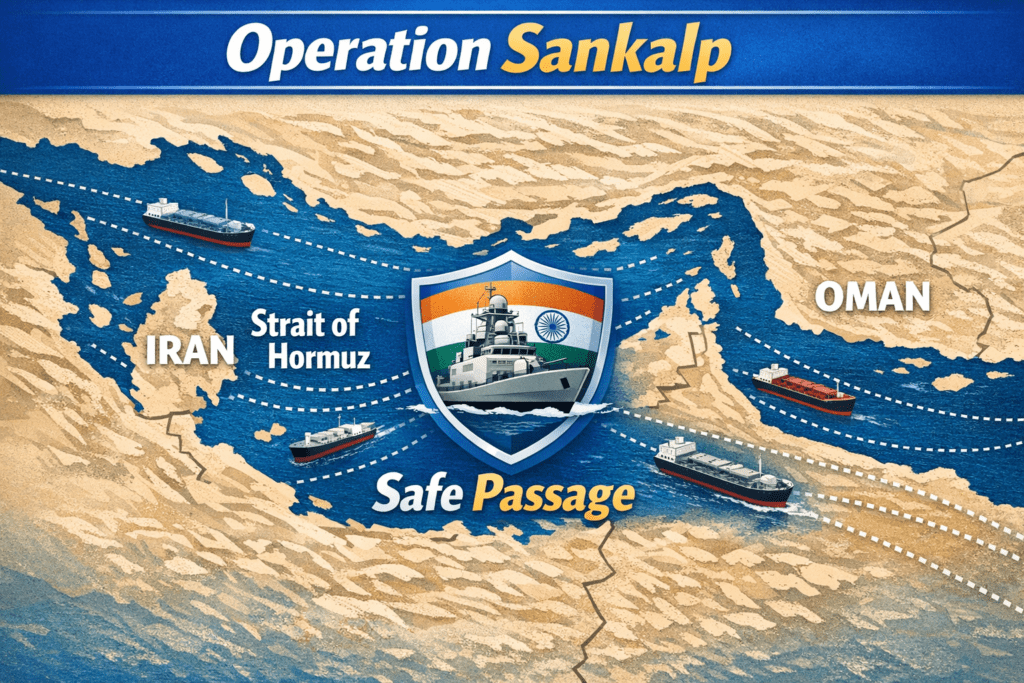
10. The Road Ahead: Strengthening Maritime Security
The Strait of Hormuz will remain a flashpoint. India’s strategy moving forward includes diversifying energy routes and building larger strategic reserves. However, the immediate focus remains on keeping Indian vessels in Strait of Hormuz safe through naval escorts and satellite tracking.
Conclusion: Vigilance is the Only Way Forward
The news that all 22 vessels are secure is a testament to India’s naval strength. Keeping Indian vessels in Strait of Hormuz safe will always be India’s top priority to maintain economic stability. As long as the Navy remains vigilant, we can expect every Indian vessel in Strait of Hormuz safe in the future.
Frequently Asked Questions (FAQs)
Q1: Is every Indian vessel in Strait of Hormuz safe right now?
A: Yes, the Indian government has officially confirmed that all 22 vessels are currently secure.
Q2: How does Operation Sankalp keep Indian vessels in Strait of Hormuz safe?
A: It provides naval escorts and constant communication monitoring to protect merchant ships.
Q3: What happens if Indian vessels in Strait of Hormuz safe status changes?
A: The Indian Navy is equipped to respond to emergencies to protect maritime assets and citizens.