
Introduction: The Digital Reputation Economy
In the high-stakes financial landscape of 2026, your money is no longer just about what you have in the bank; it is about what your data says you will do. We have entered the era of the “Digital Reputation Economy,” where Credit History and Loan Eligibility act as your invisible financial DNA. Whether you are looking to purchase a Future Luxury Car or secure a mortgage for a smart mansion, your past behavior is the only currency that truly matters to modern lenders.
As AI-driven algorithms replace traditional bank managers, the relationship between Credit History and Loan Eligibility has become more precise and unforgiving. A single missed payment in 2024 could cost you $50,000 in extra interest by 2026. This article is the ultimate guide to mastering your credit narrative, navigating the new 2026 scoring tiers, and ensuring your loan applications are met with a “Yes” every single time.
1. The 2026 Shift: Why Credit History is More Than Just a Number
Historically, credit was a static report updated every 30 days. In 2026, the Credit History and Loan Eligibility link is dynamic. Lenders now use “Ultra-Fast Data” to see your financial health in real-time.
The AI Influence
Modern lenders use Artificial Intelligence to analyze your spending patterns. They don’t just look at whether you paid your bills; they look at how you spend. Do you frequently use Crypto Wallets for high-risk trades? Do you rely on “Buy Now Pay Later” (BNPL) services? Every digital footprint now feeds into your Credit History and Loan Eligibility profile.
2. Anatomy of a 2026 Credit Report: The Five Pillars
To optimize your Credit History and Loan Eligibility, you must understand the five pillars that build your score. In 2026, these are weighted with extreme precision:
-
Payment History (35%): The undisputed king. A single 30-day delinquency can drop a 2026 credit score by up to 100 points instantly.
-
Credit Utilization Ratio (30%): In 2026, the “30% rule” is dead. Elite borrowers keep their utilization under 7% to maximize their Credit History and Loan Eligibility.
-
Length of Credit History (15%): Lenders value “Old Money” behavior. Keeping your oldest credit card open—even if you don’t use it—is essential for long-term stability.
-
Credit Mix (10%): A blend of revolving credit (cards) and installment loans ( auto/mortgage ) proves you can handle diverse financial pressures.
-
New Credit Inquiries (10%): In 2026, “Hard Inquiries” stay on your record, and too many in a 6-month window signal “Credit Hunger,” which is a major red flag for Credit History and Loan Eligibility.
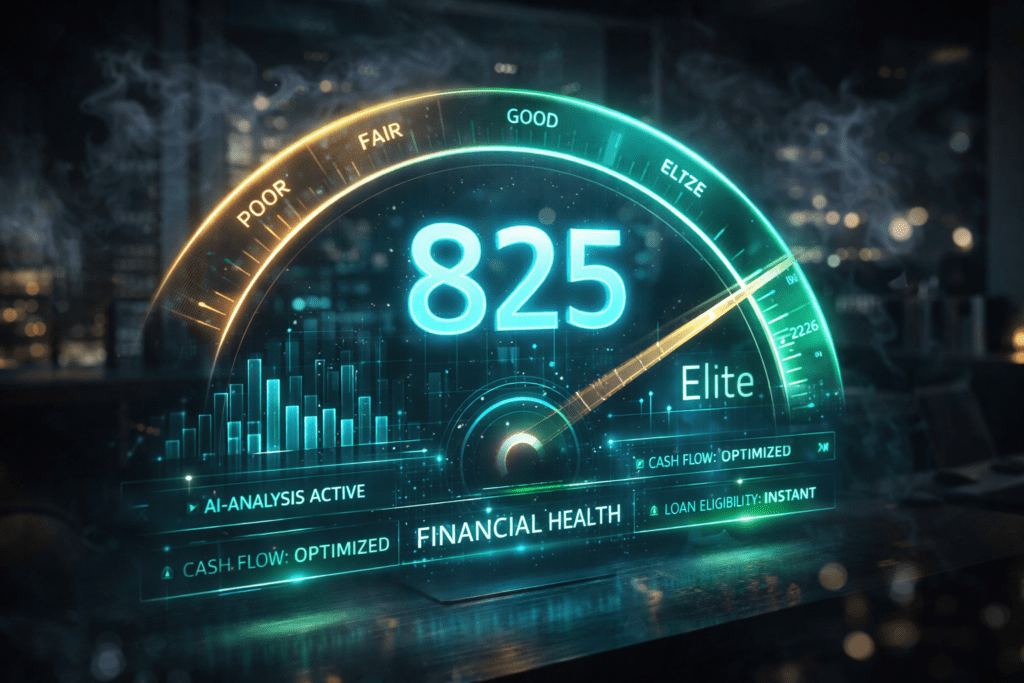
3. The 2026 Credit Tiers: Where Do You Stand?
Lenders have tightened their belts. What was considered “Good” in 2020 is now “Fair.”
| Score Range | Status in 2026 | Impact on Loan Eligibility | Typical Interest Rate |
| 800 – 850 | Elite / Ultra-Prime | Instant Approval; Concierge Service | 2.5% – 4% |
| 740 – 799 | Superior | High Approval Rate; Great Terms | 4.5% – 6% |
| 670 – 739 | Standard | Manual Review Likely; Average Terms | 7% – 9% |
| 580 – 669 | Sub-Prime | Limited Eligibility; High Collateral | 12% – 18% |
| 300 – 579 | Distressed | Denial Likely; Secured Options Only | 25%+ |
4. Impact on High-Value Assets: Mortgages and Auto Loans
Your Credit History and Loan Eligibility are most visible when buying big-ticket items.
Mortgages: The $100,000 Difference
A score of 780 vs. 680 can mean a difference of 1.5% in your mortgage rate. Over a 30-year loan on a 500,000home,that1.5140,000 in extra interest**. This makes credit repair the single most profitable “side hustle” you can undertake.
Auto Loans for the Future
Whether you are financing a Tesla or a BMW R 18 The Crown, your Credit History and Loan Eligibility determine if you pay for the car once, or twice (due to interest). In 2026, “Zero-Interest” deals are reserved exclusively for those with scores above 810.
5. The “BNPL” Trap: A New Threat to Your Eligibility
“Buy Now Pay Later” services (like Affirm or Klarna) have become a silent killer of Credit History and Loan Eligibility. While they seem convenient, many AI-driven credit models now view frequent use of BNPL as a sign of poor cash flow. If you want to maintain an elite credit status in 2026, use BNPL sparingly and always pay it off before the first statement.
Read Our Premium Article: How to Save $500+ on Your Premium
6. Revolutionary Strategy: “Alternative Data” Integration
In 2026, you can now opt-in to include “Alternative Data” in your credit report. This is a game-changer for Credit History and Loan Eligibility.
-
Rent Reporting: Your on-time rent payments can now boost your score by 20-50 points.
-
Utility & Streaming Bills: Paying your AI Business Tool subscriptions on time can now build credit.
-
Bank Data (Open Banking): Allowing lenders to see your savings balance directly can offset a lower credit score.
7. Bad Credit? The 2026 Recovery Roadmap
If your Credit History and Loan Eligibility are currently in the “Poor” range, do not panic. The 2026 financial system is designed for rapid recovery if you follow the rules.
-
Dispute Errors via AI: Use AI Business Tools to scan your credit report for errors. In 2026, a single misreported “Late Payment” can be removed in 48 hours via automated dispute platforms.
-
The “Secured” Step: Use a secured credit card. In 2026, “Credit Builder” loans are the fastest way to prove to AI algorithms that you have changed your ways.
-
Debt Snowballing: Pay off the smallest balances first to reduce the number of open debts, which AI models love to see.
8. Expert Insights: The Lender’s Perspective
“We no longer look for perfection; we look for consistency,” says Robert Chen, a Senior Risk Officer at Experian. “In 2026, the relationship between Credit History and Loan Eligibility is about the ‘Recovery Curve.’ Even if you had a bankruptcy five years ago, if your last 24 months show a perfect ‘Payment Heartbeat,’ you are still eligible for prime rates.”
9. Shifting Gears: The Future of Credit (2027 and Beyond)
As we look past 2026, we see the rise of Decentralized Credit (DeFi Credit). Soon, your Credit History and Loan Eligibility might be stored on a blockchain, making it global. Your “Score” in India could help you get a loan in the USA instantly. This makes maintaining your digital reputation a global necessity.10. Conclusion: Your Credit is Your Wealth
Your Credit History and Loan Eligibility are the most powerful financial tools in your arsenal. In 2026, a high credit score is better than a high salary. A salary can be lost, but a strong credit reputation allows you to rebuild, reinvest, and reclaim your lifestyle at a moment’s notice.
Treat your credit report like a masterpiece. Protect it, grow it, and use it to unlock the Future of Luxury. The road to wealth in 2026 is paved with good credit.
FAQ: Mastering Your Financial DNA
Q1: How long does a late payment affect my loan eligibility?
A: In 2026, the impact fades after 24 months of perfect behavior, but the record stays for 7 years.
Q2: Does checking my own score hurt my credit history?
A: No. “Soft Inquiries” (checking your own score) never hurt your Credit History and Loan Eligibility.
Q3: Can I get a home loan with a 600 score in 2026?
A: Yes, but you will likely need a 20%+ down payment and will pay a “Risk Premium” in your interest rate.