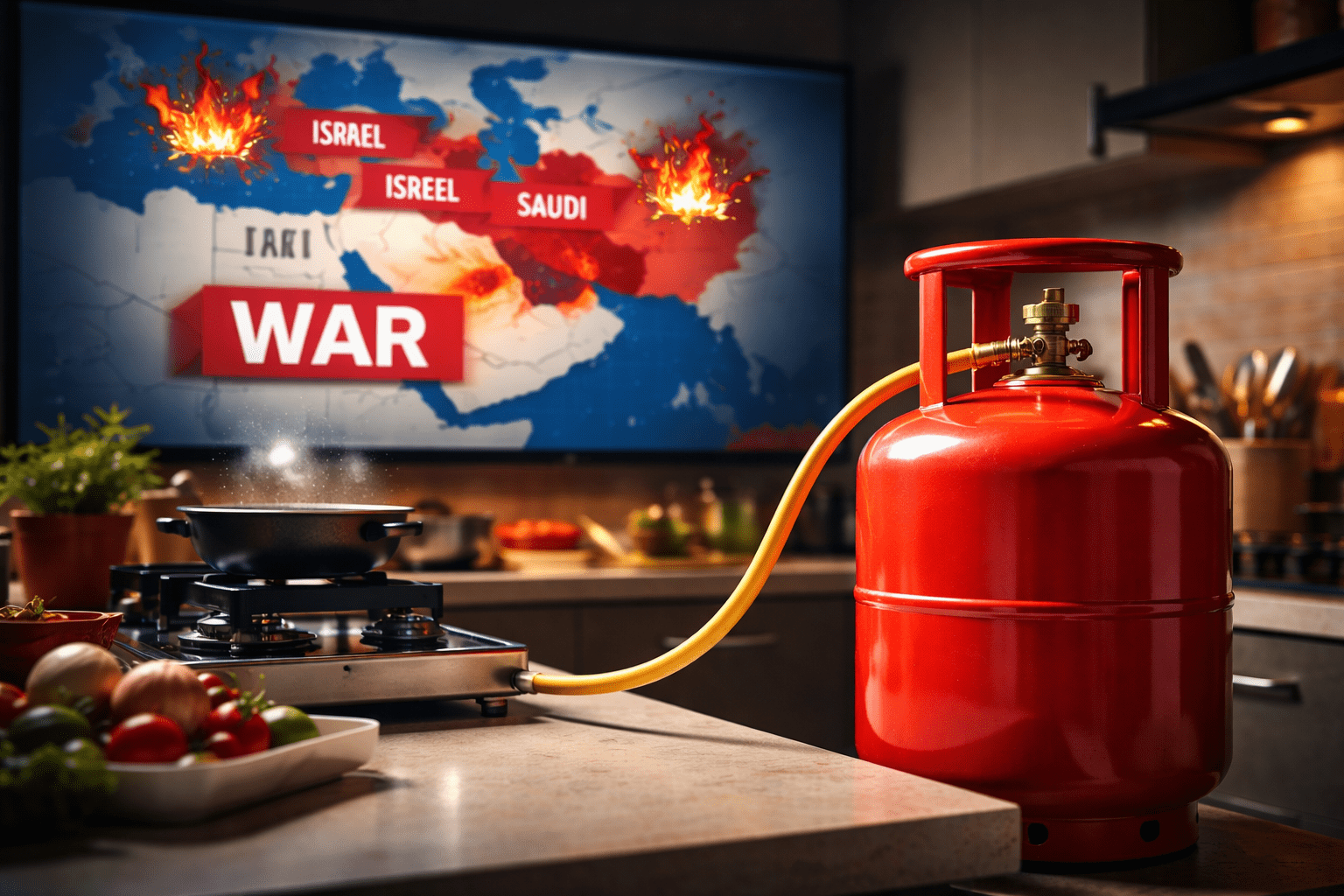
The global energy landscape is currently under a state of high alert. As the flames of conflict intensify between Israel, Iran, and the United States, the heat is being felt directly in the heart of Indian households. The Gas Cylinder Supply India—once considered a stable utility—is now navigating through a “Perfect Storm” of geopolitical tensions, shipping bottlenecks, and skyrocketing crude oil prices.
If you have recently experienced a delay in your LPG delivery or are worried about the next price hike, you are not alone. In this 2000-word deep dive, we uncover the frightening reality of how the war in the Middle East is threatening to disrupt the Gas Cylinder Supply India and what it means for your monthly budget.
1. The Geopolitical Trigger: Trump, Netanyahu, and Khamenei
The current crisis isn’t just a local issue; it is a direct consequence of shifting powers in the Middle East. With Donald Trump taking a hardline stance on Iranian oil exports and Benjamin Netanyahu expanding military operations against Iranian-backed proxies, the region has become a tinderbox.
The transition of power in Iran to Mojtaba Khamenei has added another layer of uncertainty. His aggressive military posture has led to direct ballistic missile exchanges, making the Persian Gulf—the world’s most critical energy artery—a combat zone. For the Gas Cylinder Supply India, this means that every time a drone is launched, the global insurance rates for gas tankers skyrocket, making it harder and more expensive for India to bring fuel home.
Read our latest analysis on the Strategic Global Oil Price Trends 2026
2. Why India is Vulnerable: The 60% Import Trap
Most Indian citizens believe that our gas is produced domestically. The reality, however, is far more concerning. India produces only a fraction of the LPG it consumes. The Gas Cylinder Supply India is dependent on imports for over 60% of its total volume.
Our primary suppliers—Qatar, Saudi Arabia, the UAE, and Kuwait—are all located within the immediate vicinity of the conflict. This extreme dependency means that any disruption in the Middle East isn’t just a “news item”—it is a direct threat to the energy security of 1.4 billion people.
3. The Red Sea Chokepoint: Shipping Nightmares Explained
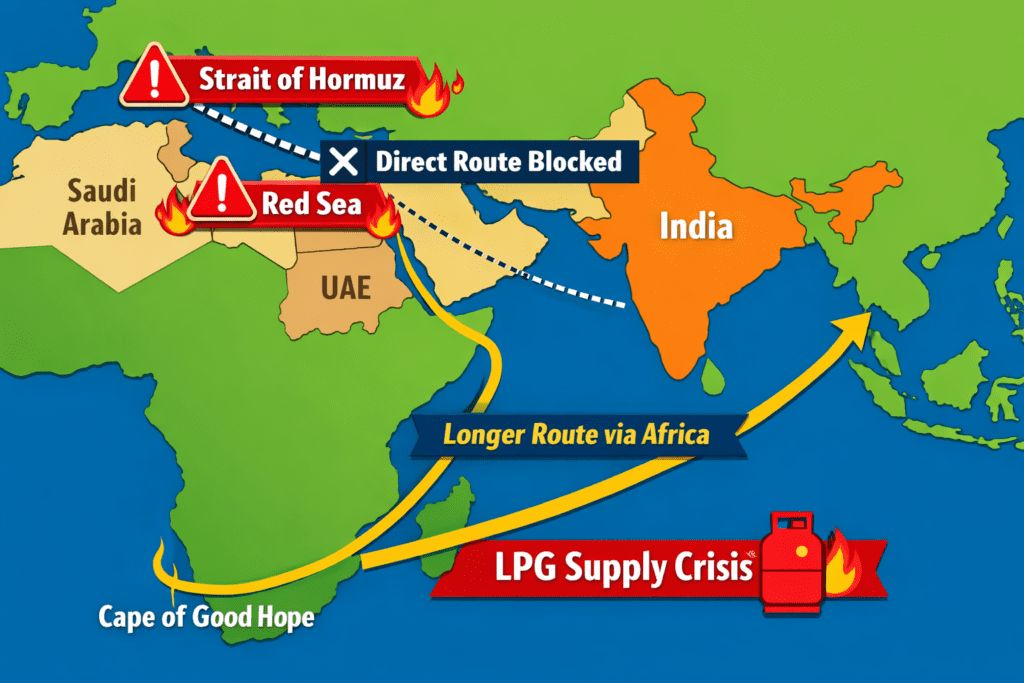
The Gas Cylinder Supply India relies on a very specific logistics route. Historically, tankers pass through the Strait of Hormuz and the Red Sea to reach Indian ports like Mundra, Jamnagar, and Mangalore.
-
The Houthi Threat: Drone and missile attacks on commercial vessels in the Red Sea have forced tankers to take a massive detour.
-
The Cape of Good Hope Route: Ships are now circumnavigating the entire continent of Africa. This adds roughly 12,000 extra kilometers and 15 days of travel time.
-
The Cost Factor: A longer journey means more fuel consumed by the tanker, leading to a “War Surcharge” that ultimately impacts the price of your cylinder.
4. 7 Critical Impacts on Gas Cylinder Supply India
The war is affecting the Gas Cylinder Supply India in seven distinct ways:
-
Inventory Rationing: OMCs like Indane, HP, and Bharat Gas are reportedly managing stocks more conservatively to ensure essential services don’t run dry.
-
Delayed Delivery Cycles: What used to be a 48-hour delivery window has stretched to 7-10 days in several states.
-
Increased Contract Prices: The Saudi Contract Price (CP), which benchmarks LPG rates, has surged due to war-risk premiums.
-
Currency Volatility: As the war drives investors toward the US Dollar, the Indian Rupee weakens, making LPG imports even more expensive for the government.
-
Industrial Prioritization: In emergency scenarios, gas is often diverted to power plants and hospitals, potentially leaving domestic consumers in a lul.
-
Bottling Plant Backlogs: Due to irregular arrival of tankers at ports, bottling plants are operating in “fits and starts,” causing logistics gaps.
-
Panic Booking Trends: Fear of a total war has led to a 25% increase in advance booking requests, further straining the already fragile supply chain.
5. Price Prediction: Will LPG Cross ₹1200 per Cylinder?
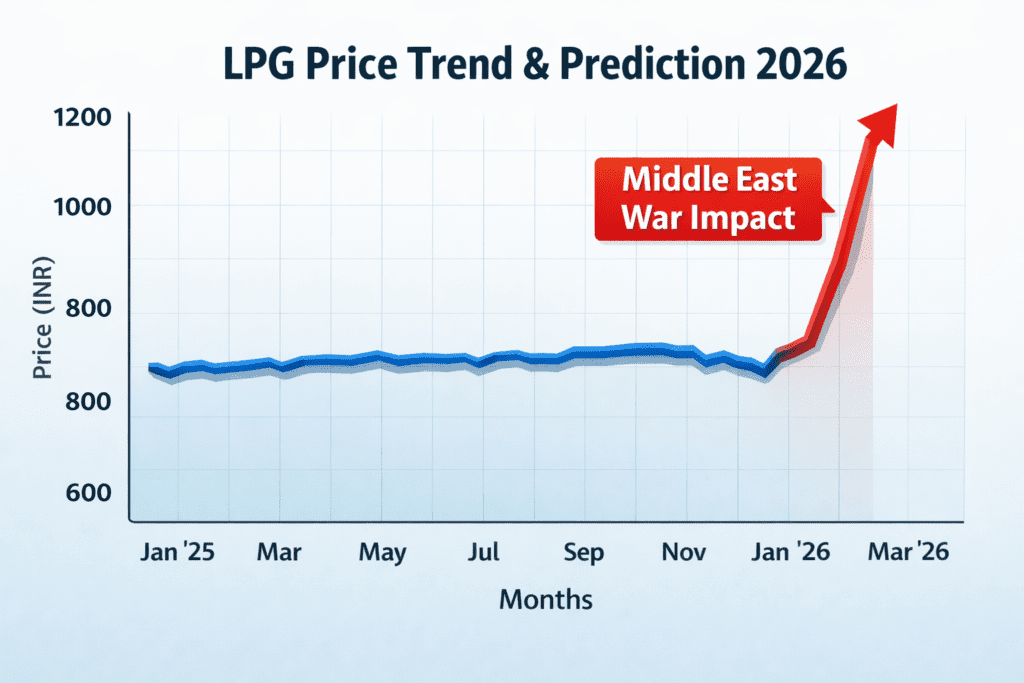
This is the question every homemaker is asking. Currently, the government and Oil Marketing Companies (OMCs) are absorbing much of the global cost hike. However, there is a limit to how much a “subsidy” can cover.
If the war escalates to include oil refineries in Iran or Saudi Arabia, analysts predict that global LPG prices could spike by 30-40%. In such a scenario, the Gas Cylinder Supply India retail price could realistically cross the ₹1200 mark for non-subsidized domestic users.
“For the latest and most accurate updates on LPG rates, you can visit the official Ministry of Petroleum and Natural Gas Portal.”
6. Logistics Breakdown: Why Your Refill is Taking 10 Days
The Gas Cylinder Supply India is a “Just-In-Time” supply chain. This means that we don’t have months of gas sitting in warehouses; we rely on a constant flow of tankers.
-
Port Congestion: Due to rerouted ships arriving all at once, major Indian ports are facing “Berthing Delays.”
-
Shortage of Specialized Vessels: LPG requires specialized pressurized tankers. There are only a limited number of these in the world. With many refusing to sail into “War Zones,” the availability of ships has plummeted.
-
Last-Mile Logistics: High diesel prices (also driven by the war) are making it more expensive for distributors to send trucks into rural areas.
7. The Strategic Reserve: Can the Government Save Us?
India has been building strategic petroleum reserves (SPR) and salt cavern storages for LPG. However, these are designed for short-term emergencies (usually 10-15 days).
The government is currently exploring alternative suppliers like Russia and the USA to stabilize the Gas Cylinder Supply India. While this diversification is good, the transport costs from the US are nearly triple those from the Middle East, meaning the “Low Price” era of gas might be behind us for a while.
8. Action Plan for Consumers: 5 Ways to Survive the Shortage
Since the Gas Cylinder Supply India is currently volatile, consumers should adopt these five essential survival strategies:
-
Switch to Induction for 50% of Meals: Use your electric stove for boiling water, pulses, and milk. This can extend a single cylinder’s life by up to 20 days.
-
Verify via Official Apps: Do not rely on rumors from WhatsApp. Check your booking status only on IndianOil One, HP Pay, or Hello BPCL.
-
Check for Leaks: A minor leak in your rubber tube (Suraksha pipe) can waste 5% of your gas monthly. Inspect it today.
-
Use Pressure Cookers: Minimize open-pot cooking to save significant amounts of energy.
-
The “Two-Cylinder” Rule: If you are a single-cylinder connection holder, consider applying for a Double Bottle Connection (DBC) to ensure you have a backup during long delivery delays.
9. Conclusion & Final Verdict
The crisis surrounding the Gas Cylinder Supply India is a stark reminder of how interconnected the world is. A conflict in the streets of the Middle East can directly affect the heat in an Indian kitchen. While the government is working hard to ensure there is no total blackout of gas, the combination of high prices and delivery delays is likely to persist as long as the war continues.
We recommend all consumers to stay calm, avoid panic-buying, and monitor official channels for any price corrections. The Gas Cylinder Supply India is resilient, but it is currently being tested by fire.
Frequently Asked Questions (FAQs)
Q1: Is there a permanent gas shortage in India?
No, there is no permanent shortage. The current issues in Gas Cylinder Supply India are logistical delays caused by the Middle East war.
Q2: How do I track my gas delivery priority?
The best way is to use the digital apps of your provider. Digital bookings are logged in a central system that is harder to bypass than manual bookings.
Q3: Is the government planning to increase the LPG subsidy?
There are talks within the Finance Ministry to increase the subsidy for PM Ujjwala Yojana users to protect the poorest from the war-led price spike.
1 thought on “Shocking News: 7 Reasons Why Gas Cylinder Supply India is Crashing Due to Middle East War”